
 Guaranteed Excellence
- Free & Fair Quotes
- Sydney Electricians
 0404 360 546 Guaranteed Excellence Free & Fair Quotes Sydney Electricians Guaranteed Excellence Free & Fair Quotes Sydney Electricians

 Rated 5.0 on Google
Sydney EV Charger
Installations
Safe, compliant installations built for real-world driving and long-term reliability.



Accelerate Your Switch to Electric with Our EV Charging Solutions
We install EV chargers for Sydney homes, delivering safe, compliant charging solutions designed around your property, vehicle, and power supply. From helping you choose the right charger to completing a clean, professional installation, we make home charging simple and dependable.
Why Charge at Home?
Switching from the petrol pump to your garage isn't just convenient — it's dramatically cheaper. Here's why thousands of Aussie EV owners charge at home.

Cheaper Than Petrol
EV running costs are roughly $2–4 per 100 km on home electricity vs $12–18 per 100 km on petrol. The average Aussie drives just 33 km/day — a quick overnight charge covers a full week of commuting.

Cheaper Than Public Charging
Home charging with a dedicated EV plan costs as little as 5–8¢/kWh — compared to 40–80¢/kWh at public fast chargers. Plug in overnight and wake up to a full battery every morning.

Ultimate Convenience
No queues, no detours — just plug in when you get home, like charging a phone. The average Sydne
y commute is only ~33 km/day, so a home charger easily keeps up with your daily driving.

Solar Synergy
Got rooftop solar? A smart charger like the Zappi diverts your excess solar energy straight into your car — so you can charge for virtually free during the day instead of exporting to the grid.
Transparent Pricing — No Surprises
Most standard home installs range from $850 to $2,500, depending on cable run length, charger type, and switchboard condition. We provide a fixed, itemised upfront quote before any work begins.
Our 4-Step Professional Process
We've refined our workflow over hundreds of installations to ensure your charger is installed safely, neatly, and with zero stress for you.

1. Consult & Quote
Submit your details for a free, no-obligation quote. We review your photos and requirements to provide an accurate upfront price.
- •Switchboard review
- •Cable path planning
- •Fixed price quote

2. Booking & Deposit
Once you’re ready to proceed, we confirm any required deposit, make sure the charger or materials are available, and lock in a suitable installation date.
- •Deposit payment if required
- •Charger stock confirmation
- •Installation date selection

3. Professional Install
Our licensed electricians carry out the installation with a focus on safety, neat workmanship, and reliable long-term performance.
- •Dedicated charger circuit
- •Neat cable routing
- •Testing and verification

4. Setup & Handover
We commission the charger, configure the app settings, and show you how everything works so you can start charging with confidence.
- •Charger commissioning
- •App setup and Wi-Fi pairing
- •Testing and handover
EV Charging Solutions for Every Home
Whether you're after a simple wall-mounted charger, a solar-smart setup that runs off your roof, or a three-phase upgrade for faster speeds — we've got the right solution for your property.
Home EV Charger Installs
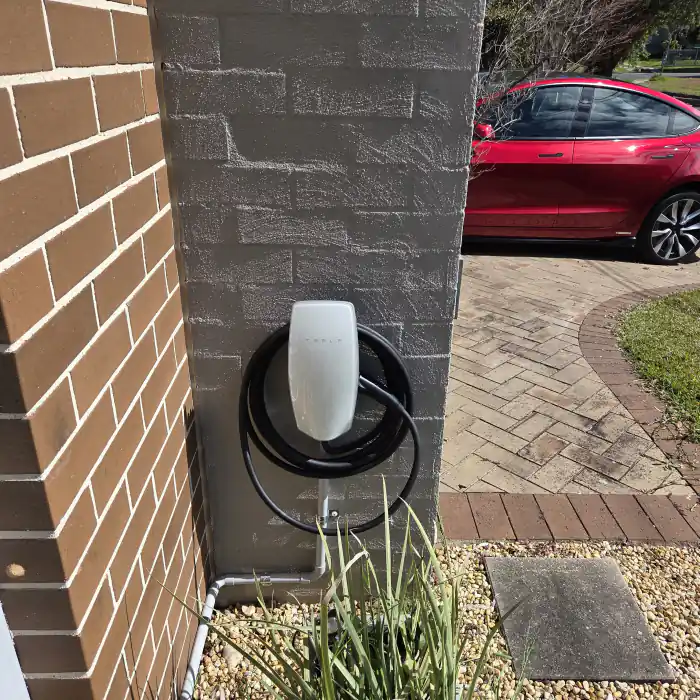
A dedicated wall-mounted EV charger is the safest and most convenient way to charge at home. We install Tesla Wall Connectors, Zappi, Evnex, Ocular, Fronius, Ohme and more — matched to your switchboard, vehicle, and charging needs.
 Dedicated circuit with safety switch Neat, professional cable routing App setup and charger walkthrough included 5-year workmanship warranty on every install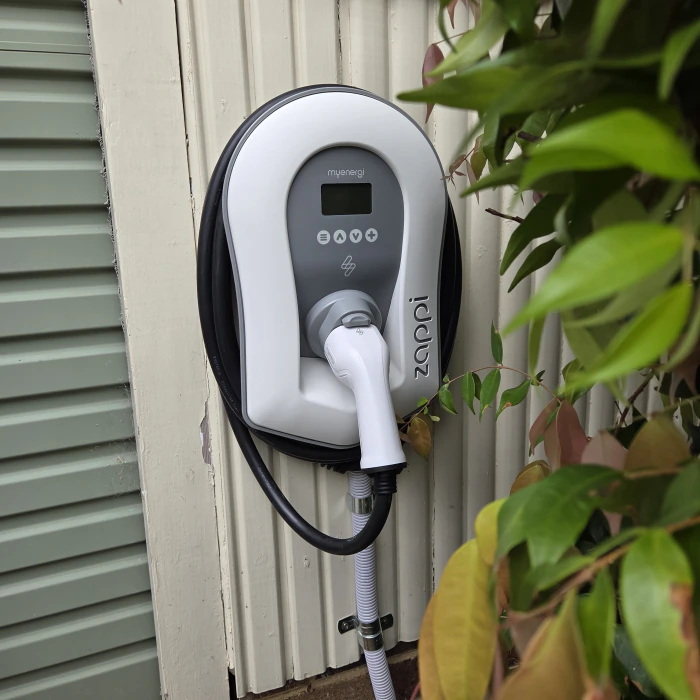
Solar-Smart EV Charging
Already have solar panels? Chargers like the myenergi zappi and Evnex E2 can divert your excess solar energy straight into your car — so you charge for free on sunny days instead of sending it back to the grid.
Charge your EV using excess rooftop solar Control charging, schedules, and solar modes from the app Lower charging costs and reduce grid reliance Great for getting more value from your solar system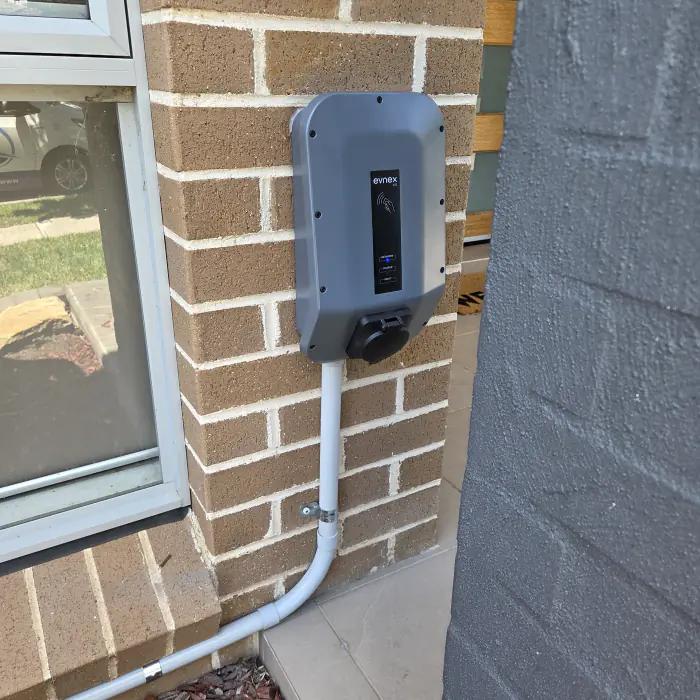
Single-Phase or Three-Phase
Not sure which EV charger setup is right for your home? We assess your switchboard and power supply, then recommend the best option — whether that’s a standard 7.4 kW single-phase charger or a faster 22 kW three-phase installation.
Single-phase suits most homes (up to 7.4 kW) Three-phase enables faster charging (up to 22 kW) Switchboard and supply assessment included Upgrade advice and pricing if requiredCharging Speeds at a Glance
Not all EV charging options perform the same. Here’s a simple comparison of the most common home charging levels and what they mean in practice.

Standard Outlet
Level 1
~2.3 kW
~10 km range/hr
Best kept as a backup option only. Charging from a standard power point is very slow, and a full charge can often take well over 24 hours.

Single-Phase Charger
Level 2 — Most Popular
~7.4 kW
~40 km range/hr
The most practical option for most homes. It easily covers everyday driving and usually allows overnight charging from low to full.

Three-Phase Charger
Level 2 — Premium
11–22 kW
~75–120 km range/hr
A faster option for homes with three-phase power. Ideal for shorter charging windows, larger batteries, or higher daily driving needs.
What's Included in Every Install
Every EV charger installation includes the key components needed for a safe, neat, and fully functional setup.

Switchboard Assessment
We check your switchboard capacity and existing electrical setup to confirm it can safely support EV charging.
Dedicated Charging Circuit
A dedicated charger circuit is installed with the appropriate protection at the switchboard for safe, reliable operation.

Neat Cable Routing
Cabling is installed neatly and securely using the most suitable route between the switchboard and charger location.
Secure Charger Mounting
Your charger is professionally mounted in the agreed location for a safe, tidy, and durable finish.

Testing and Verification
Full electrical testing is carried out on completion to confirm safe operation and compliance with Australian wiring standards.

Smart Charging Features
Where supported, we help enable useful features like scheduling, dynamic load balancing, and solar charging modes.
App Setup & Charger Walkthrough
Wi-Fi pairing, app configuration, and a full walkthrough so you're charging confidently from day one.

5-Year Workmanship Warranty
Your installation is backed by our 5-year workmanship warranty for added peace of mind.
 Smarter Home Charging
Home EV Charging Made Simple
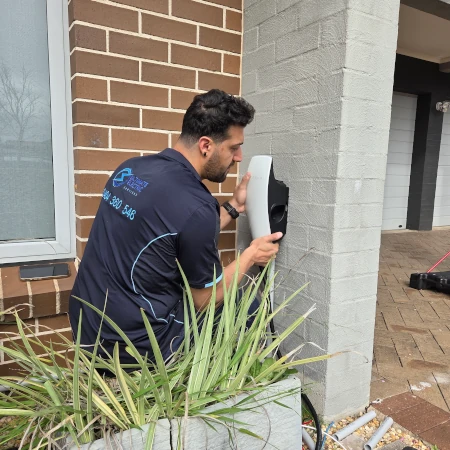
We install EV chargers in Sydney and surrounding areas, working with leading brands like Tesla, Zappi, Evnex, Ocular, and more. We recommend a setup to suit your home’s electrical setup, parking layout, and charging needs.
Matched to Your Home Setup Free, Fixed Quote Upfront Fast Turnaround Available WiFi Setup & App Configuration Fully Licensed & Insured

Ready to assess your setup?
We’ll review your setup and provide a clear, no-obligation quote so you can move forward with confidence.

Tailored recommendations

Straightforward pricing
Compatible with Leading EV Charger Brands
Explore leading charger options for different homes, vehicles, and charging needs.
Tesla Wall Connector
Expert Install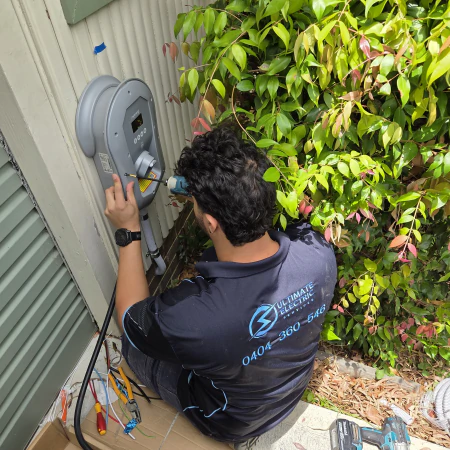
Myenergi Zappi
Expert Install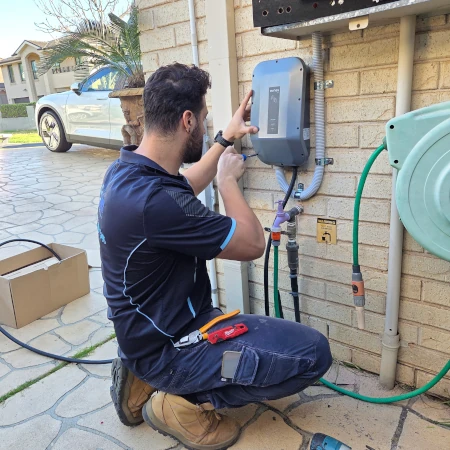
Evnex EV Chargers
Expert Install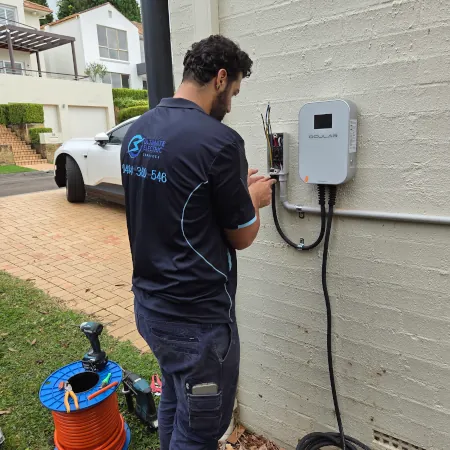
Ocular EV Chargers
Expert Install
Ohme
Expert Install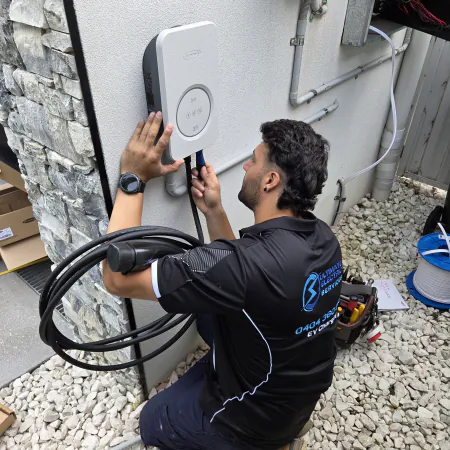
Fronius Wattpilot
Expert Install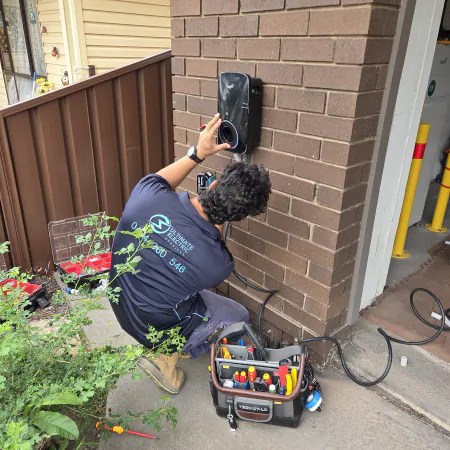
FoxESS EV Charger
Expert Install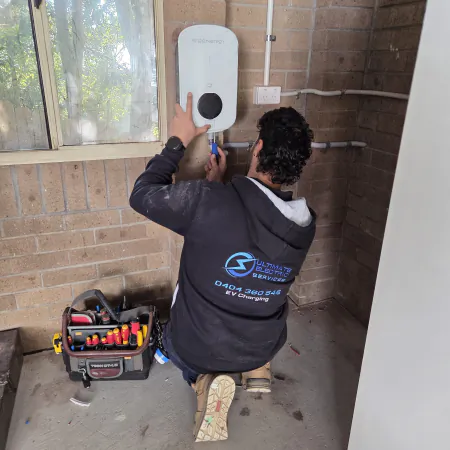
Sigenergy EV Charger
Expert Install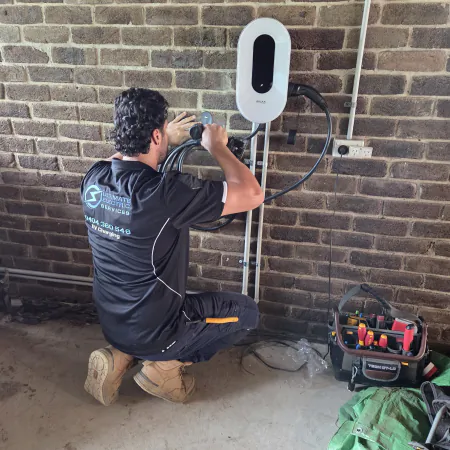
SolaX EV Charger
Expert Install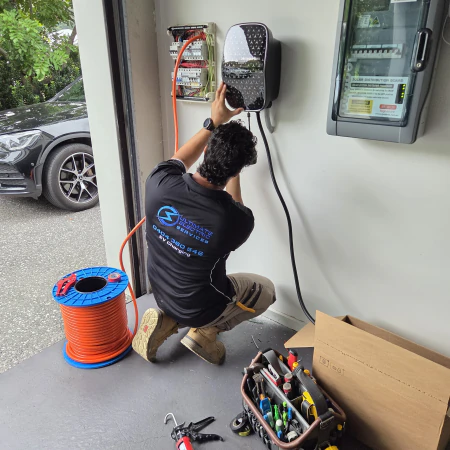
Mercedes Wallbox
Expert Install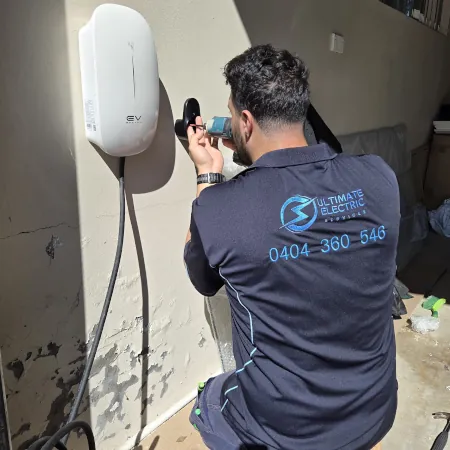
EV Switch
Expert Install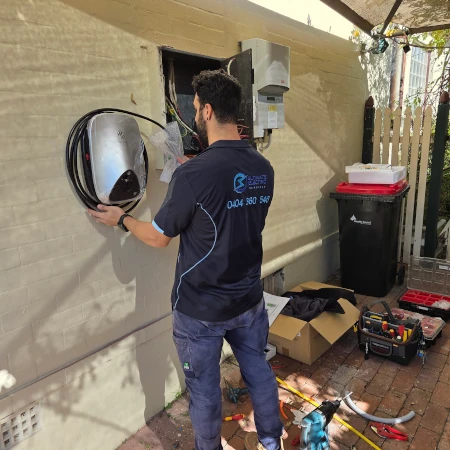
MG ChargeHub
Expert Install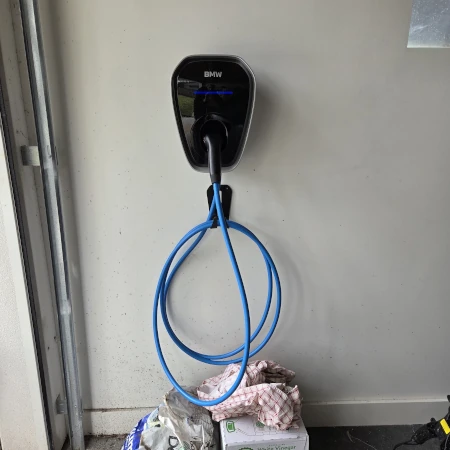
BMW Wallbox
Expert Install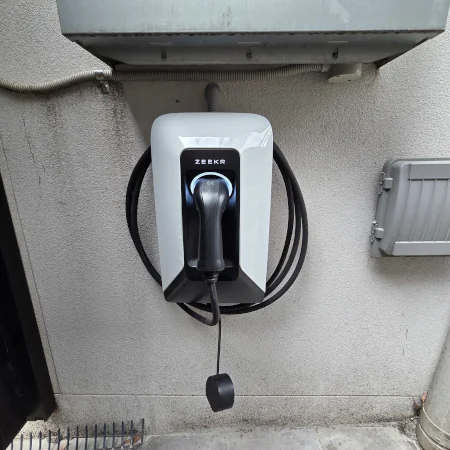
Zeekr EV Charger
Expert InstallA Better EV Charger Installation Experience
Safe, compliant EV charger installations with careful setup, clear advice, and reliable long-term performance.
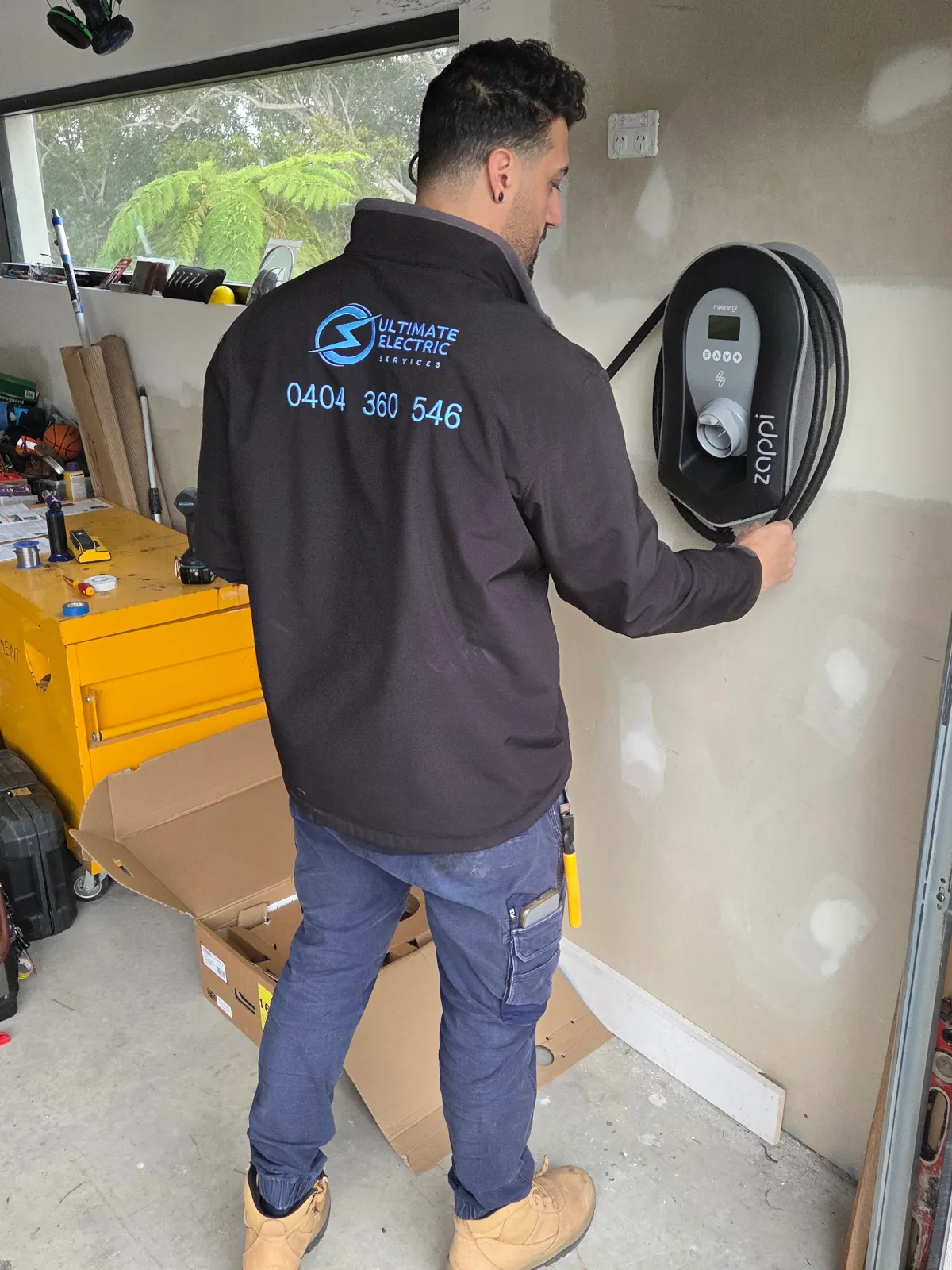
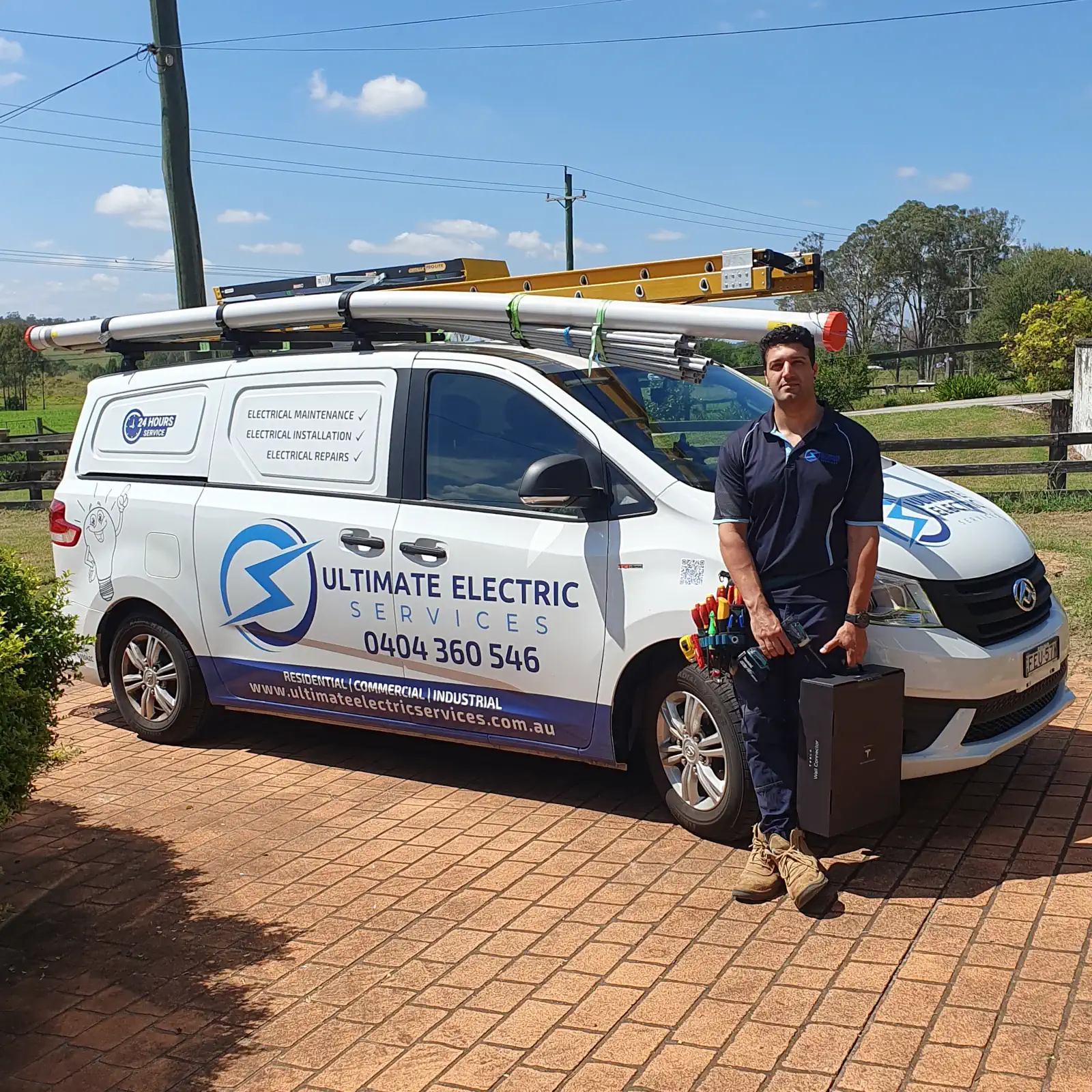
At Ultimate Electric Services, we focus on EV charger installations for homes, with setups tailored to your switchboard, parking layout, vehicle, and charging needs. We size the circuit correctly, install the right protection and cabling, and make sure everything is set up for safe, reliable long-term use.
You’ll get straightforward advice, licensed installation, proper commissioning, and help with app setup so your charger is ready to use from day one.


Trusted by Homeowners, Backed by Reviews
See what customers have said about our EV charger installations, workmanship, and service.
EV Charger Installation FAQs
We offer both options — supply-and-install or install-only — depending on what suits you. If you don't already have a charger, we can supply one as part of the installation and make sure you get the right model for your setup.
If you've already purchased a charger yourself, that's no problem either. We're happy to carry out a professional installation and handle all the wiring, configuration, and testing.
- AC Charging
- Source: Most commonly available from residential outlets and public charging stations.
- Charging Speed: Generally slower. Charging power is typically up to 22 kW for home chargers and public AC chargers.
- Usage: Ideal for overnight charging at home or in places where the vehicle will be parked for an extended period (e.g., workplace).
- Conversion: The EV's onboard charger converts AC from the charging station into DC to store in the battery.
- Infrastructure: More widespread and easier to install, often using existing electrical infrastructure.
- DC Charging
- Source: Specialised public charging stations, often found along highways and in commercial areas.
- Charging Speed: Significantly faster. Charging power can range from 50 kW to over 350 kW, allowing for much quicker replenishment of the battery.
- Usage: Ideal for quick top-ups during long trips or when a fast turnaround is needed.
- Conversion: The conversion from AC to DC is done by the charging station itself, which then directly supplies DC to the EV's battery.
- Infrastructure: Requires more robust and costly infrastructure, including higher power delivery capabilities.
Yes — virtually all home EV chargers use a Type 2 connector, which is the standard on nearly every electric car sold in Australia. This includes vehicles from Tesla, Hyundai, Nissan, BYD, MG, BMW, Audi, Volvo, and more.
In short, a quality Type 2 charger will safely charge almost any EV or plug-in hybrid on the road today.
- Faster charging speeds, typically 11 kW to 22 kW.
- Ability to charge multiple EVs simultaneously (if your electrical system can handle the load).
- Potentially higher resale value for your home.
- Inspect your switchboard to check electrical capacity, available circuit space, and overall condition.
- Confirm the charger mounting location for safe installation, convenient access to your vehicle, and proper cable routing.
- Run dedicated wiring from the switchboard to the charger location — either surface-mounted or concealed depending on your home layout.
- Mount the charger securely on a wall or post.
- Install any required sensors or CT clamps for load management or solar integration features.
- Configure and commission the charger, including app setup, Wi-Fi connection, and charging mode preferences.
- Test the system by plugging in your EV and confirming everything operates correctly.
Yes — most quality EV chargers carry an IP65 rating or higher, meaning they're fully protected against dust and heavy rain. They can be mounted on an external wall, carport post, or anywhere within reach of your parked vehicle.
We'll make sure the installation location is safe, compliant, and positioned to avoid unnecessary exposure to sun or water pooling.
Yes — many smart EV chargers can monitor your solar production in real time and divert surplus energy to your car. When your panels are generating more power than your home is using, the charger routes that excess into your EV instead of exporting it to the grid.
If you don't have solar panels, or it's night time, the charger simply draws power from the grid like a standard unit. You can install a solar-compatible charger now and take full advantage of the solar features later if you add panels down the track.
- Smartphone apps to start/stop charging, view usage data, set schedules, etc.
- Integration with home automation systems like Google Home or Apple HomeKit.
- Remote access and diagnostics by the charger manufacturer or your electrician.
- Energy consumption tracking and reporting for billing purposes.
No — most EV chargers will charge your car and run scheduled sessions without an internet connection. You can typically set schedules and adjust settings directly on the unit itself.
However, an internet connection is needed if you want to control or monitor charging remotely via a smartphone app, receive firmware updates, or view detailed energy usage statistics. If app-based features are important to you, make sure the charger's mounting location has a reliable Wi-Fi signal.
Ready To Charge Smarter?
Get a quote today and join our happy customers charging their EVs with sunshine.

Get Your Free Quote
Sydney's experts in smart EV charging. Fill out the form below and we'll be in touch within 24 hours.
Need a faster quote? Fill out our detailed form for an expedited assessment.